
5 Signs of Ovulation: How to Know If You’re Ovulating
If you are trying to conceive, working out when you ovulate can quickly become one of the biggest focuses of your menstrual cycle. You might track cervical mucus, take ovulation tests, monitor your basal body temperature or notice physical symptoms such as cramping. But what can these signs actually tell you? The first thing to understand is that there is a difference between predicting ovulation and confirming that ovulation has occurred. Some signs appear before ovulation and can help identify your fertile window. Others happen after ovulation and provide evidence that an egg has likely already been released.
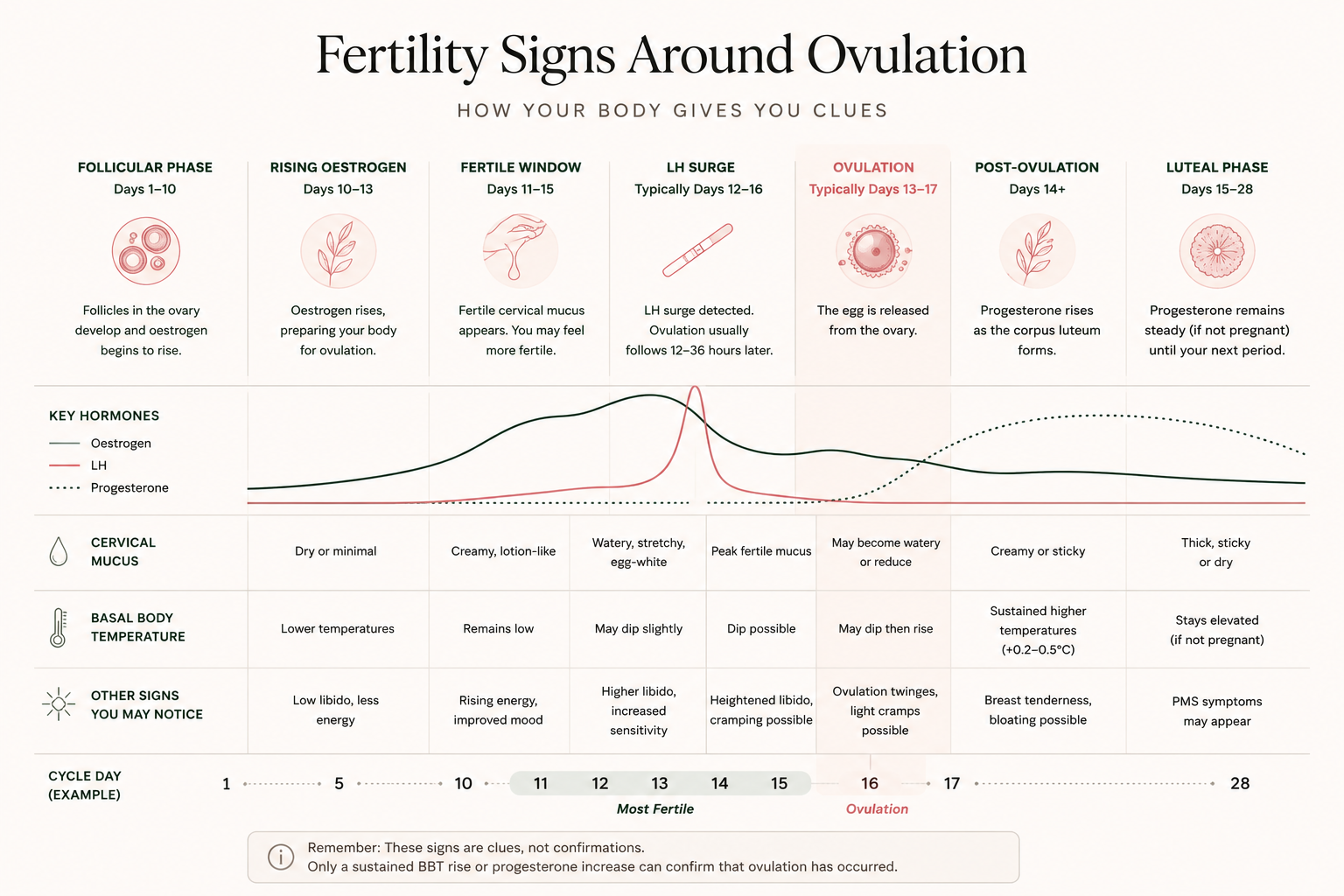
Here are five signs commonly associated with ovulation and what each one can, and cannot, tell you:
1. Changes in Cervical Mucus
Cervical mucus changes throughout the menstrual cycle in response to fluctuations in reproductive hormones. As oestrogen rises before ovulation, cervical mucus often becomes wetter, clearer and more slippery. At peak fertility, it may resemble raw egg white and stretch between your fingers. This is commonly referred to as egg white cervical mucus (EWCM).
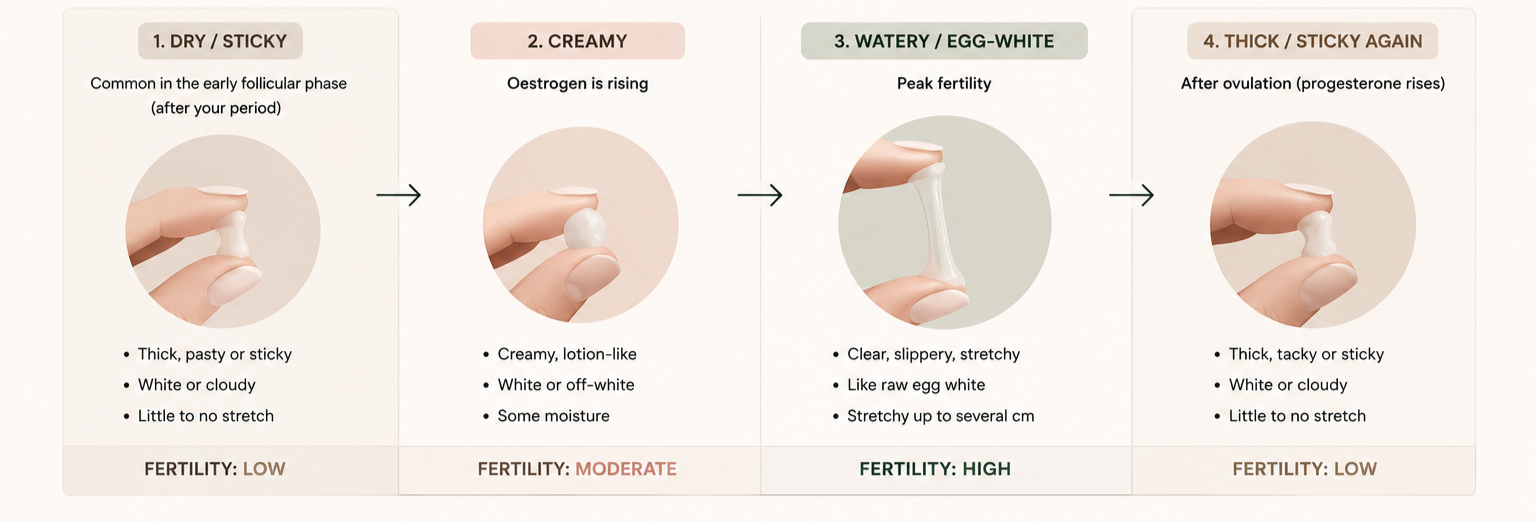
These changes create an environment that helps sperm survive and travel through the reproductive tract. For someone trying to conceive, noticing fertile cervical mucus can be useful because it often indicates that the fertile window is open. However, there is an important distinction.
Fertile cervical mucus can suggest that ovulation is approaching, but it does not confirm that an egg has been released. It is possible for the body to prepare for ovulation and produce fertile cervical mucus without ovulation ultimately occurring.
2. A Rise in Basal Body Temperature
Basal body temperature (BBT) is your body’s temperature at complete rest. After ovulation, the structure that remains after the egg is released, known as the corpus luteum, begins producing progesterone. Progesterone has a thermogenic effect, meaning it causes a small increase in body temperature. For many people, this produces a sustained temperature rise of approximately 0.2 to 0.5°C.
Tracking your temperature every day can reveal a biphasic pattern, with lower temperatures before ovulation and higher temperatures afterwards. Unlike ovulation predictor kits or cervical mucus monitoring, BBT is primarily a retrospective marker. A sustained rise in basal body temperature can provide evidence that ovulation has already occurred. One high temperature alone is not enough to confirm ovulation. Looking for a sustained temperature shift over several days is more informative.
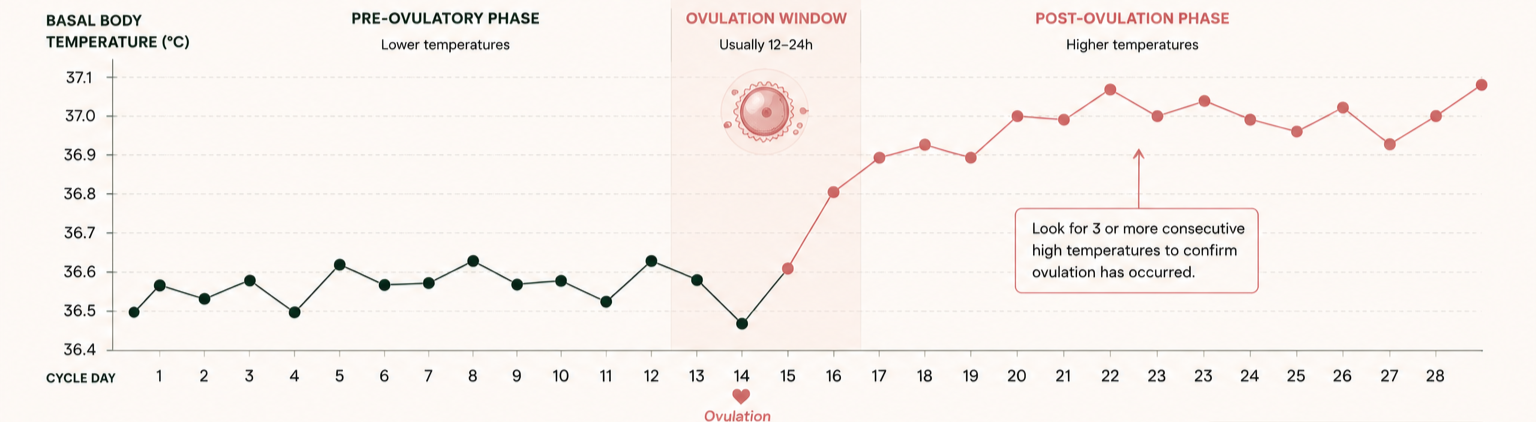
Temperature can be tracked manually using a basal body thermometer or passively using a wearable device. A basal body thermometer is used immediately after waking, before getting out of bed, and measures temperature to a greater degree of precision than a standard thermometer. Wearable devices, such as the Oura Ring, measure temperature trends continuously overnight, which can be useful for people with irregular sleep schedules or who find daily manual measurements difficult to maintain.
These methods collect temperature data differently, so the readings should not be compared directly. The important feature is the pattern within your own data over time, particularly whether a sustained temperature shift appears after ovulation.
Illness, alcohol consumption, disrupted sleep, travel and changes in the time your temperature is measured can also affect BBT readings.
3. Ovulation Pain
Some people experience discomfort around the time of ovulation. This is known as mittelschmerz, a German word meaning “middle pain.” Ovulation pain may feel like a mild ache, cramp or sharp sensation on one side of the lower abdomen. It can last for a few minutes, several hours or occasionally longer. The exact cause is not completely understood. The discomfort may be associated with enlargement of the dominant follicle before ovulation, rupture of the follicle when the egg is released or irritation caused by follicular fluid entering the pelvic cavity. Ovulation pain can be useful when considered alongside other fertility signs. However, pain alone cannot reliably confirm that ovulation has occurred. Not everyone experiences mittelschmerz, and abdominal discomfort can have many other causes.
4. Changes in Libido
Some women notice an increase in sexual desire around the fertile window. Hormonal changes occurring before ovulation, particularly rising oestrogen and androgen levels, may contribute to this increase. From a reproductive perspective, this timing makes biological sense. Sexual desire may increase during the part of the menstrual cycle when conception is most likely. However, libido is influenced by many factors, including stress, sleep, relationships, medication and general wellbeing. An increase in libido may coincide with the fertile window, but it should not be used as a reliable method of predicting or confirming ovulation.
5. Spotting or Light Bleeding
A small number of women experience light spotting around the time of ovulation. This may appear as pink, red or brown discharge and usually lasts for a short period. Mid-cycle spotting may occur due to hormonal fluctuations around ovulation. However, spotting is not a reliable marker of ovulation.
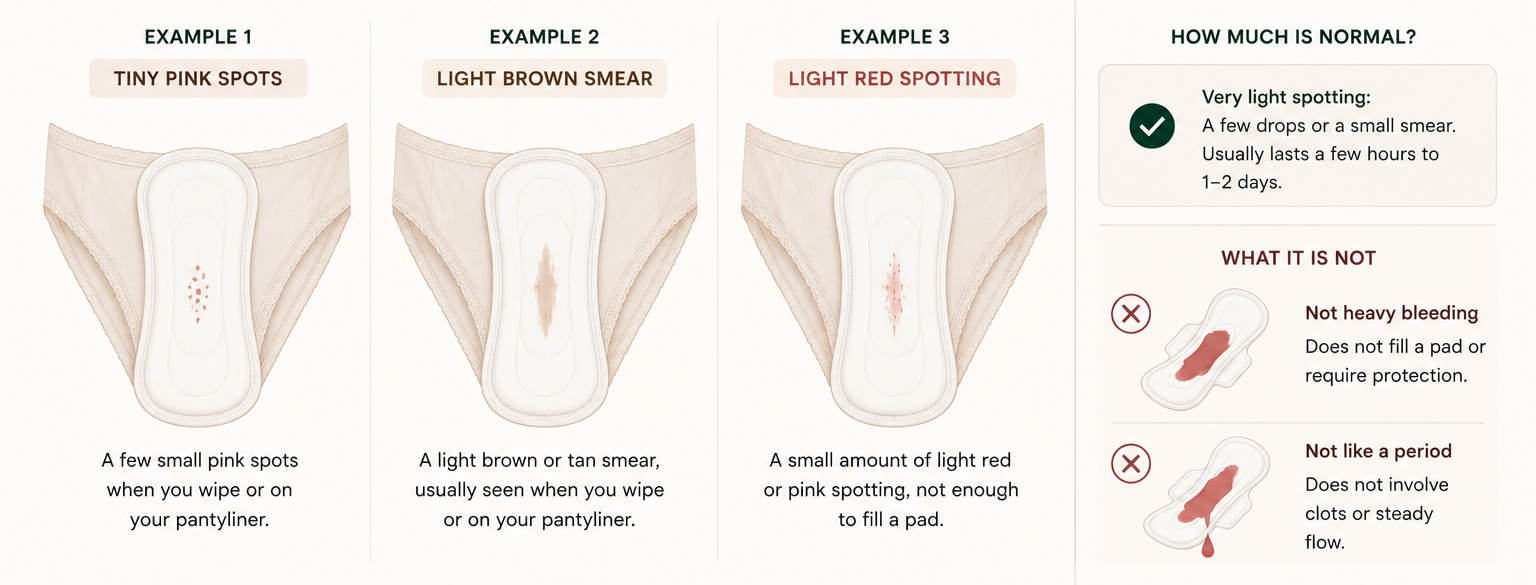
Bleeding between periods can occur for many reasons, and persistent, heavy, painful or unusual bleeding should be discussed with a healthcare professional. Ovulation spotting may occur around the fertile window, but its presence or absence cannot tell you with certainty whether ovulation has occurred.
Can You Actually Confirm Ovulation at Home?
No single symptom or home test can definitively confirm that ovulation has occurred. Instead, tracking several fertility signs together can provide a clearer picture of what is happening throughout the menstrual cycle. Importantly, some fertility signs help predict that ovulation is approaching, while others provide retrospective evidence that ovulation has already occurred.
For example:
Cervical mucus can help identify when fertility is increasing and ovulation may be approaching.
LH tests detect the luteinising hormone surge that typically occurs before ovulation. A positive LH test suggests that ovulation is likely approaching, but it does not confirm that an egg was subsequently released.
Basal body temperature can provide retrospective evidence of ovulation. A sustained temperature rise reflects the increase in progesterone that usually occurs after an egg has been released.
Using these methods together can provide a more complete picture of the fertile window and whether ovulation likely occurred.
For people undergoing fertility investigations, ovulation can be assessed more directly using ultrasound monitoring to track follicle development and rupture, or blood tests measuring progesterone during the luteal phase.
A Positive Ovulation Test Does Not Confirm Ovulation
One of the most common misconceptions when tracking fertility is that a positive ovulation predictor kit means an egg has definitely been released. Ovulation predictor kits detect an increase in luteinising hormone, or LH. The LH surge triggers the biological processes that lead to ovulation, and ovulation commonly occurs within approximately 24 to 36 hours of the beginning of the surge. However, detecting an LH surge does not prove that the follicle subsequently ruptured and released an egg. This is why combining LH testing with other observations, such as cervical mucus changes and a sustained temperature rise, can provide a more complete picture of the cycle.
Your body can provide useful clues about where you are in your menstrual cycle, but not every sign means the same thing. Fertile cervical mucus, changes in libido and ovulation pain may indicate that ovulation is approaching or occurring. A sustained rise in basal body temperature provides stronger retrospective evidence that ovulation has already occurred. Spotting can occur around ovulation, but it is neither necessary for ovulation nor a reliable method of confirming it.
Understanding the difference between predicting ovulation and confirming ovulation can make fertility tracking more useful and prevent individual symptoms or test results from being given more significance than the science supports.
This article contains affiliate links. If you purchase through these links, Science of Fertility may earn a commission at no additional cost to you.